


(A hob is the household spirit of Northern English folklore — it works a building overnight and asks for nothing but a bowl of cream. Hobfolk: a company of them. That is what we are — your back office, working while you sleep.)
The back office,
actually working.
Your office shuts at six. Your work doesn't: the enquiry that lands at seven, the drawing nobody started, the invoice nobody has asked about. Hobfolk gives you departments that answer enquiries, draft drawings and quotes, file compliance, book freight and reconcile your books, all day and then all night as well.
Not a tool you have to learn. A department that turns up.
Knowing what to automate, and what to leave alone, is the job.
There is a lot of software that promises to automate your office, and it demos beautifully. Then somebody has to configure it, connect it, decide what it is allowed to do, notice when it silently stops, and keep it current while the business changes underneath it. That work never gets done, so the tool quietly becomes another tab nobody opens.
What you need is the finished thing, so that is what you get: the roles designed, the job descriptions written, the systems built to fill them, connected to what you already use, and run as a service with our name on the outcome. You do not learn a product. You get a department, on a retainer, with somebody accountable.
It starts with people. A team goes in at the beginning — interviews with the people whose work is in question, then the design of how the company should run, then the build. The same team stays on the account afterwards. The operating side of it is led by thirty years of running operations inside manufacturing businesses.
The night work is the part people repeat back to us, and it is real — the desks do not stop at six. But it is a consequence, not the product. The product is that the work is done properly at all.
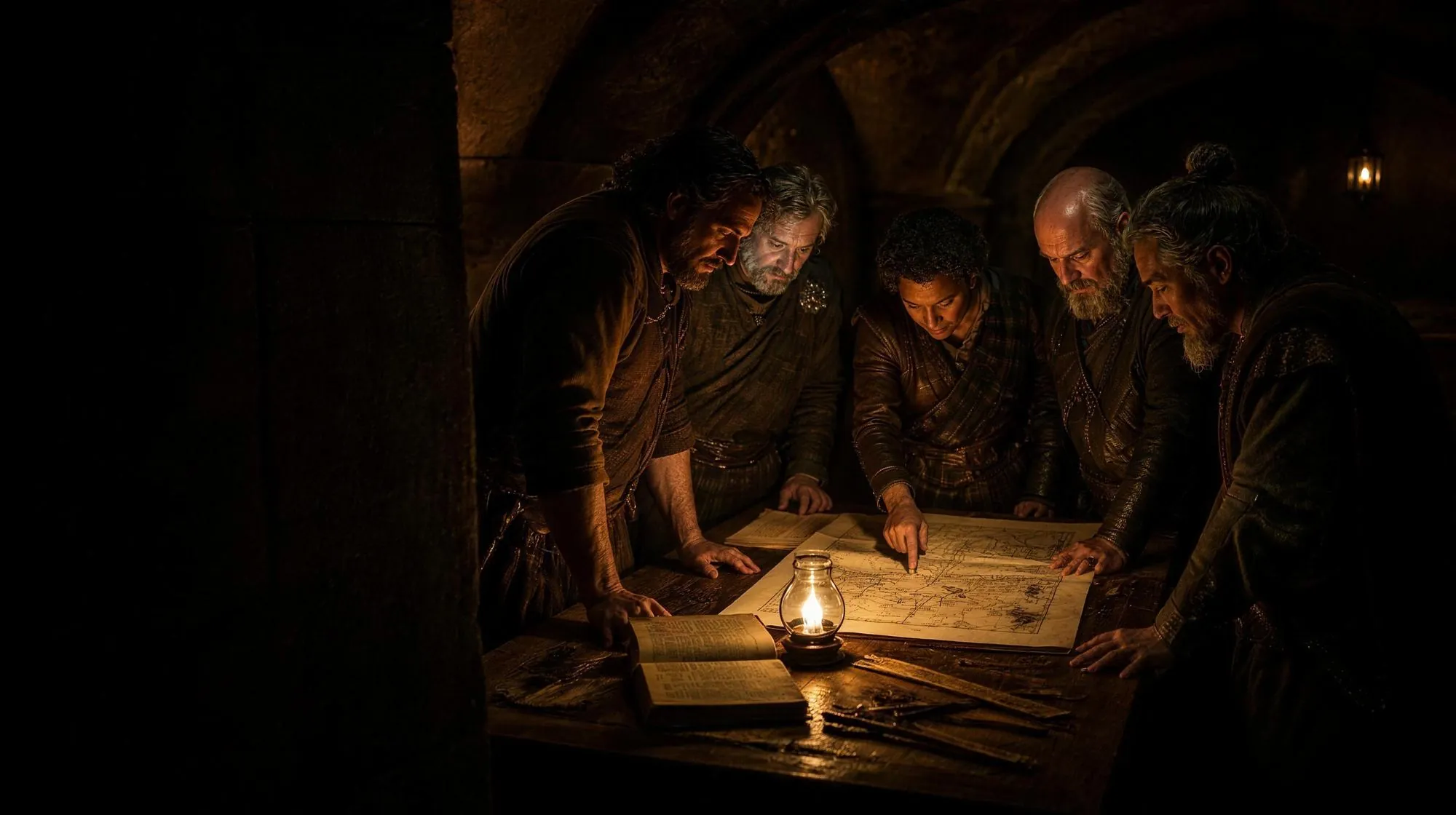
“Superpowers”
Gordon Aitcheson · Managing Director · 0:55
What the desks synthesise — run on our own companies first, with real orders and real money, before any of it was sold to anyone.
Captions on · the sound is worth it
What happens between the last person out and the first person in
- 22:41NellEnquiry from Halden Leisure read, answered, folder opened — 21 minutes after it landed.
- 23:26KeddieGA drawing and a render issued against the Halden brief. Scale figure in frame.
- 00:58PriaBank reconciled. Two payments matched, one short by the carriage line — flagged, not guessed.
- 01:44GarrowNDA sent to the new fabricator. Drawings held back until it comes back signed.
- 02:37TamConsignment 4471 has not scanned in 26 hours. Carrier case opened.
- 03:52CorrNine posts scheduled. Last week's read: 3 of 11 carried the traffic, the rest are being cut.
- 04:19WenDelivery date on the Brayfield job is going to slip by four days. Client warned tonight.
- 05:41HeskOvernight run verified at the far end. One send claimed and not found — reopened.
- 06:48NellThree enquiries answered. Two quotes drafted and sitting in your approvals for the morning.
Work does not fall through because your people are bad at their jobs
A promise nobody wrote down is a promise that dies.
It falls through the gaps between them. A concept studio, a fabrication floor and an install crew all touch the same project from different buildings, sometimes different countries, and the handovers are held together by somebody remembering to send an email.
So an enquiry sits for three days because the person it landed on was on site. A quote goes out without the drawing. A supplier is never chased because the person who was chasing them left. An invoice ages quietly because asking for money is nobody's favourite job and everybody's optional one.
None of these are hard problems. They are attention problems, and attention is the one thing a busy company has none of at half past six.

The departments
Enquiries & quoting
Every enquiry answered the day it lands, filed, owned by a named desk, and priced.
Open 02Project office & programme
The won job sequenced, the people it depends on told, and the promised date and the real date kept from drifting apart.
Open 03Drawing & visualisation
A dimensioned drawing and a picture of the thing, back before the client has finished thinking about it.
Open 04Demand & marketing
Content planned, posted and measured. Campaigns designed. Ads managed. Outreach that gets replies.
Open 05Studio & materials
Everything that carries your name — flyers to signage, identity to websites, renders to film.
Open 06Compliance, documents & contracts
RAMS, O&M manuals, handover packs and a confidentiality agreement out before the drawings are.
Open 07Assurance & verification
Independent proof, taken at the far end, that work which reported success actually happened.
Open 08Logistics & dispatch
Booked, tracked, cleared through customs, and chased when it stops moving.
Open 09Invoices out, cash in
Invoices raised, books reconciled, cash position current, and a separate desk that does the asking.
OpenThe same machine, pointed the other way
Forty contractors, one standard, and one place the evidence has to arrive.
Attraction operators, brand owners, estates teams and client-side project offices appoint forty contractors and are then the quality gate for work they did not do. The paper volume is identical to a fabricator’s; it is simply arriving instead of leaving.
The desks run in that direction without changing shape. Drawing checks incoming drawings against the specification instead of issuing them. Assurance tests each vendor’s evidence instead of assembling ours. Money assesses the applications received. Logistics tracks what is arriving, on what day, and what has gone quiet.
A formal quality regime on your side is a demand for that layer. It is the reason the verification desk exists at all. If you are the one receiving forty contractors' paperwork, start a conversation →
What that buys you
Named desks. None of them is a person.
Hobfolk is software given a company's shape: named desks with defined remits, an address each, and a coordinator making sure two of them never work the same thread. We say this on the front of the page rather than the back of it, because it is how the whole thing works.
What that changes for you: the desks do not get ill, do not resign, do not forget what was agreed in March, and do not need managing. What it does not change: a person still signs the quotation, the contract and anything that spends your money.
Meet the desks




Anyone can automate. The hard part is proving it happened.
Most automation reports success while failing. A send returns a message id and the mail never arrives. A deploy exits zero and the page is unchanged. A watcher runs perfectly for weeks and cannot see the thing it was built to watch.
So Hobfolk carries a department whose only job is to disbelieve the others. It checks at the far end, never from the actor's own log, and returns pass, fail, or unverifiable — which is never treated as a pass.
How the machine is built
The questions everyone asks
Is this a software product or an agency?
Do we have to replace the systems we already use?
What happens when it gets something wrong?
Who is actually accountable?
How much of our data does it need?
What size company is this for?
Can we start with one department?
Is our work used to train anything?

One conversation, and a written answer on whether we can help.
Tell us what falls through. If Hobfolk is the wrong shape for it, we will say so — that answer is free and it is quicker than a pitch.